ModuMind
See your mind. Shape it.
Product Design · 3D · AI · 2024

Problem
Cognitive reframing is abstract. Seeing your pattern in 3D, and reshaping it with your hands. Makes it tangible.
Mental patterns described in words stay in words. ModuMind turns them into generated 3D scenes you can rotate, edit, and re-render, using either natural-language chat or direct manipulation of color, material, and light.
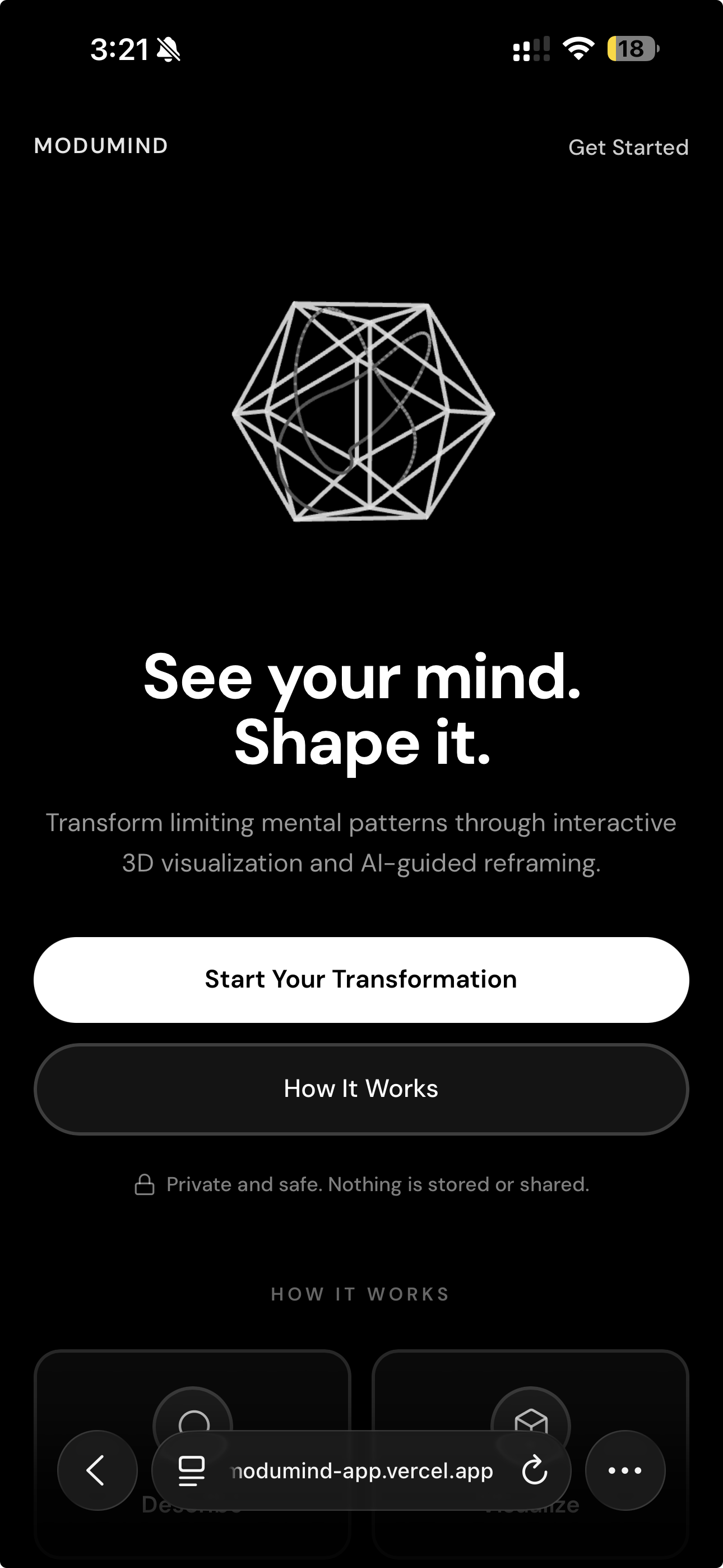
Gallery chrome, not chatbot chrome
Dark, restrained, content-forward. 'See your mind. Shape it.' positions the product closer to an art piece than a productivity tool. The premise is that what you're about to do is closer to looking than asking.
Your pattern becomes a 3D scene
Type what you're stuck on. AI names the pattern, 'The Courtroom Mind', then renders it as a generated metaphor: a brass figure suspended between cold pillars, watched by hovering forms. You can drag-rotate to look at it from any angle.
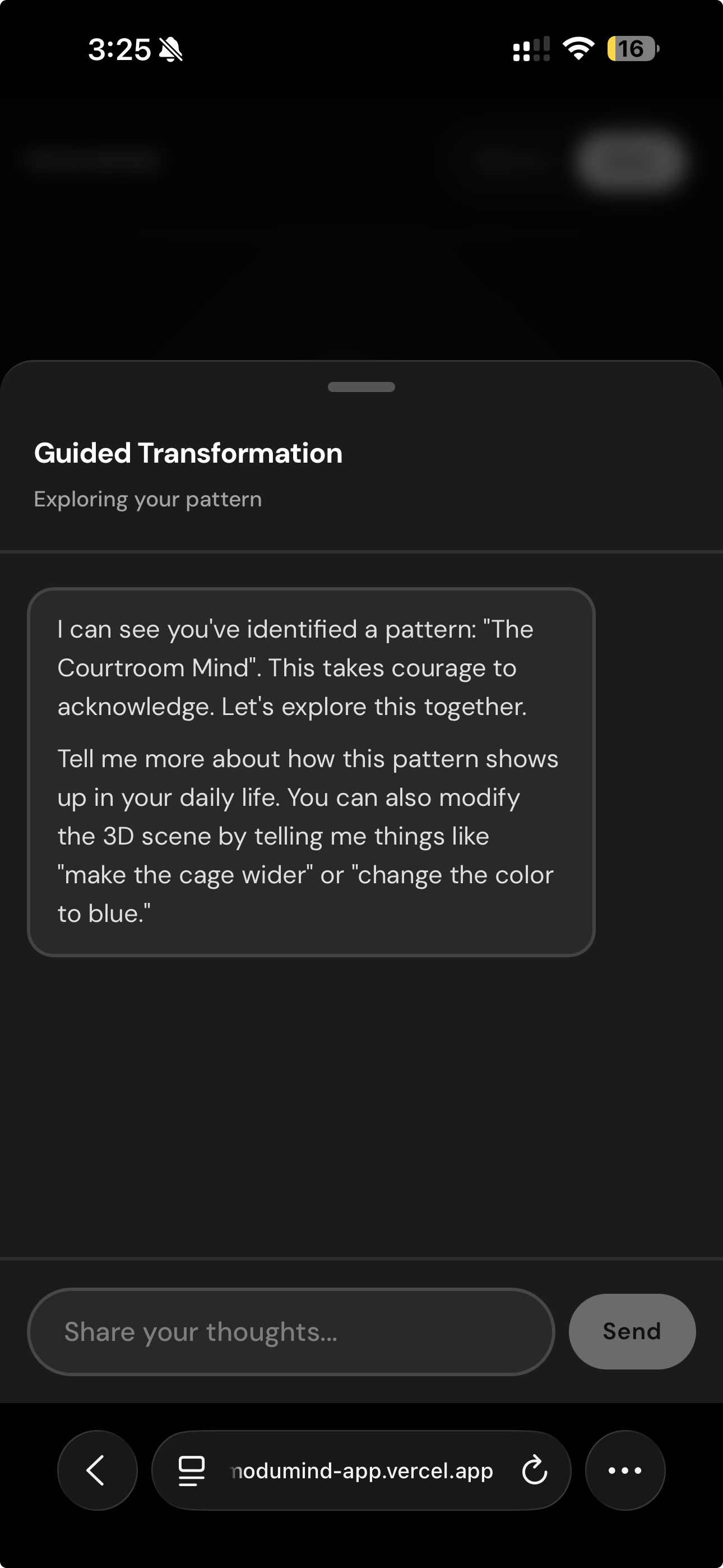
Reframe by typing what to change
A Guided Transformation chat sits beside the scene. Say 'make the cage wider' or 'change the color to blue' and the scene re-renders. The Before/After toggle lets you flip between original and reframed versions while you talk to it.
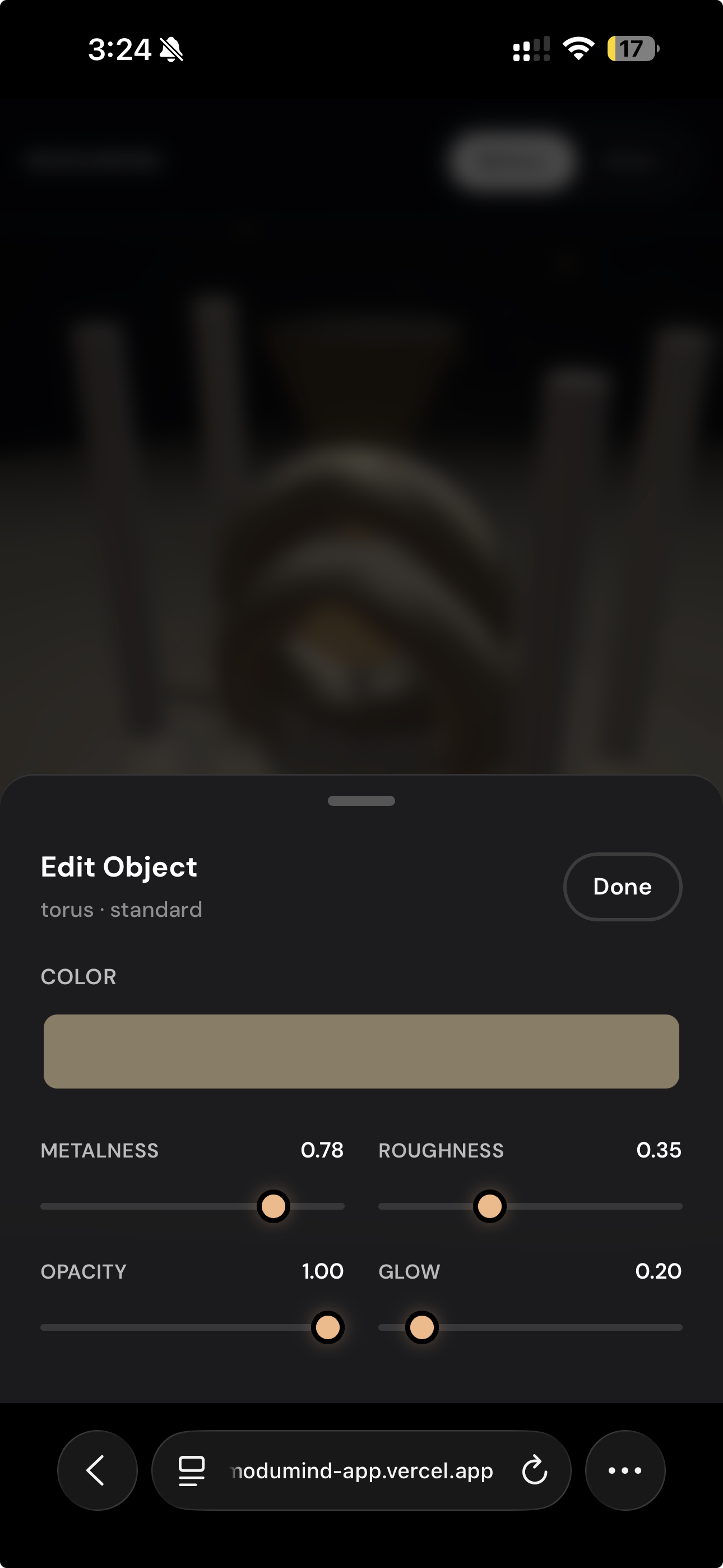
Or tap any object and shape it directly
Edit Object opens a sheet of physical sliders, color, metalness, roughness, opacity, glow. The visualisation isn't a fixed rendering; it's a malleable material you can dial in to match the texture of what you feel.
Three gestures of reshaping
Same pattern, three ways to transform it
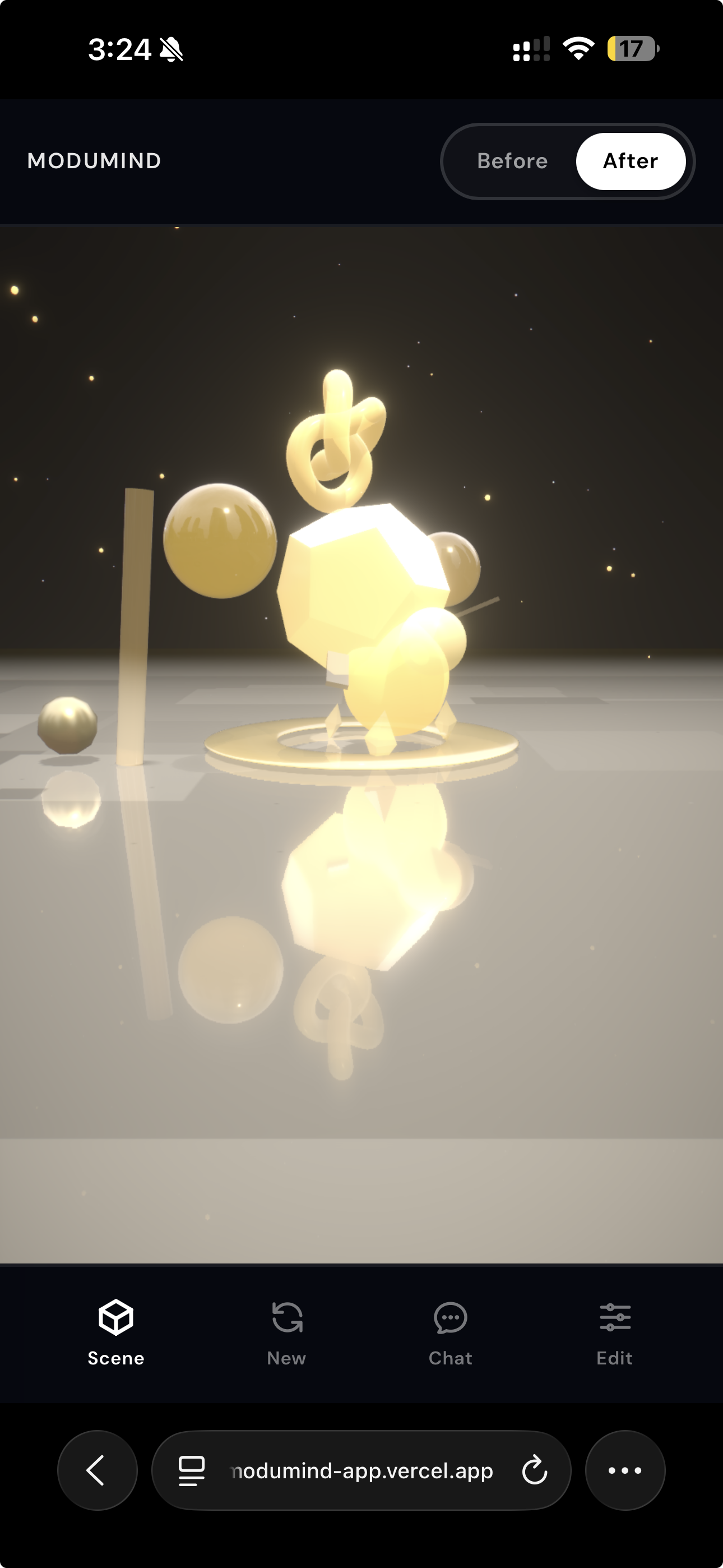
Chat reframe, After
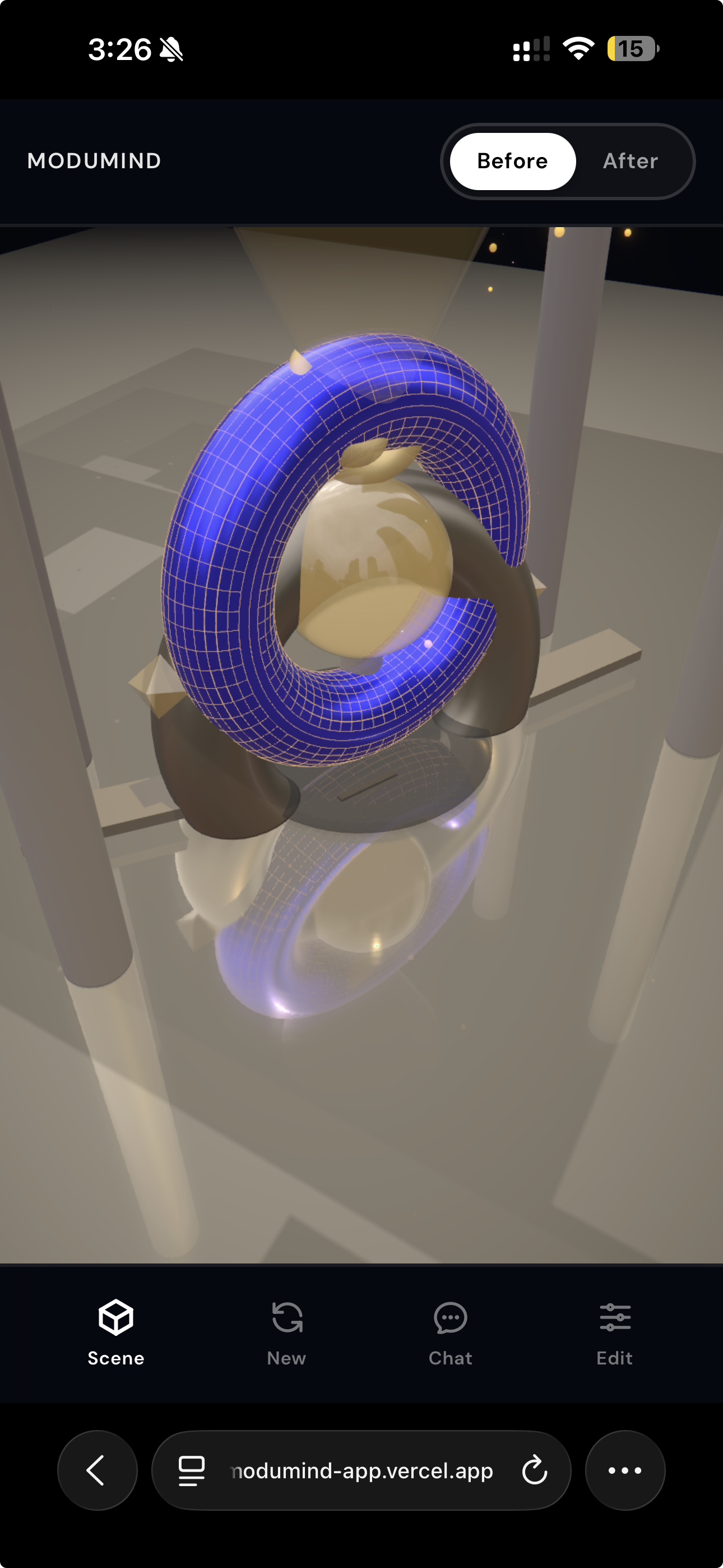
Direct edit, color shifted
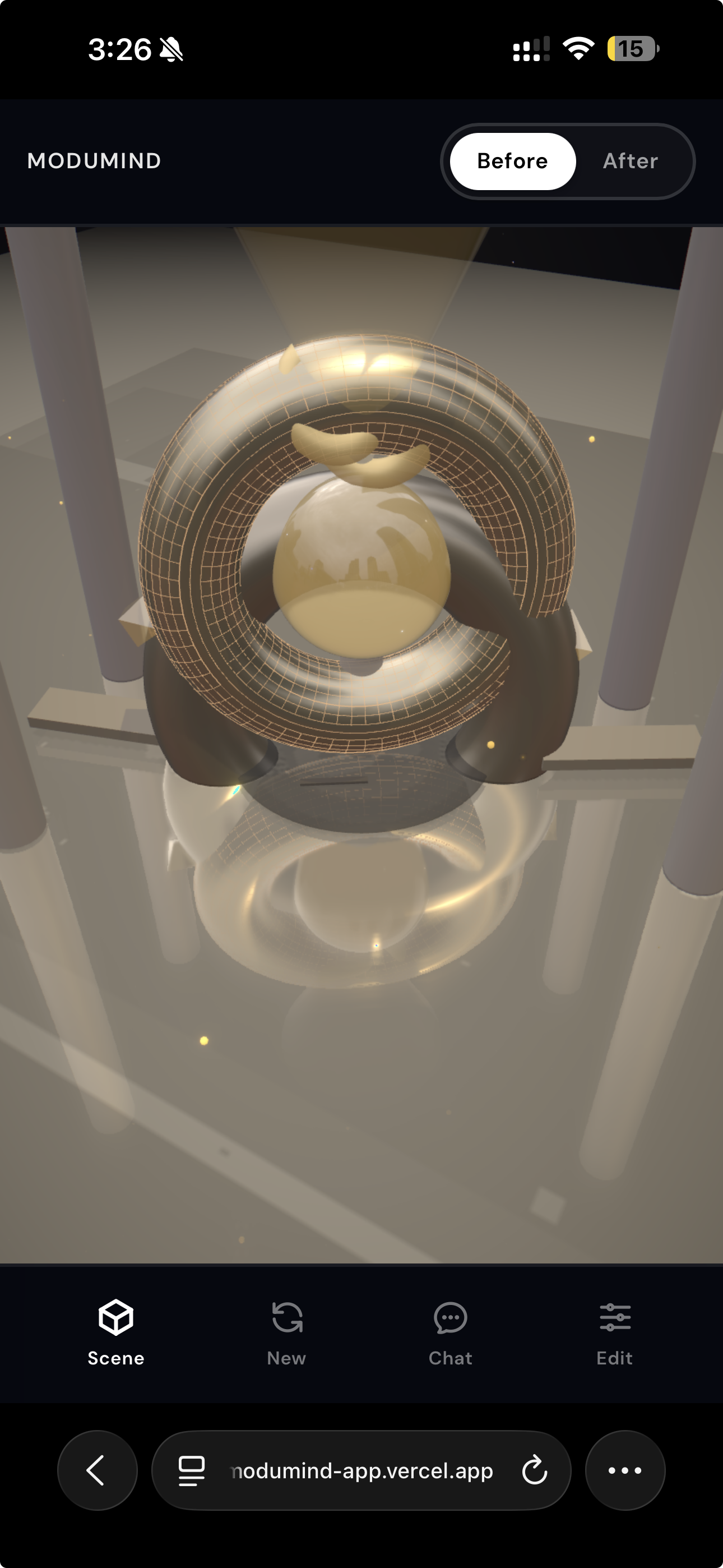
Drag to rotate. New angle
Key Insight
Embodied cognition as interface
Research from embodied cognition and somatic psychotherapy is consistent that physically manipulating an abstract concept accelerates cognitive change more than describing it. ModuMind makes the pattern a spatial object you can reshape three ways, by speaking to it, by tapping sliders, or by dragging the camera around it. Each gesture is a different micro-rehearsal of agency over the mental state.
Stack & Tools
AI
design
code
infra
Reflection
What I’d revisit
The 3D generation pipeline is impressive but slow, 30 to 60 seconds per scene, occasionally failing outright. Real therapeutic use would need sub-second rendering and a curated scene library, with full generative output reserved for novel patterns the library can't already cover. The Edit Object panel partially compensates by giving the user fast direct control without re-generating.
Next
Feelink
More client and product design case studies at hannadevries.com